
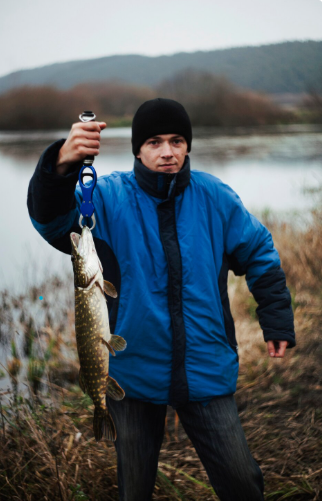

When you compare fishing trips, ask each Quebec Fishing Outfitter how it looks after its big fish. A useful answer covers more than a catch-and-release rule on paper. It should tell you who else fishes in the water, whether the lake is stocked, and which limits apply. On a remote lake inside a controlled-access zone, with one lodge, no cottages, and no public launch, pike face far less pressure than they would on a roadside lake. The fish in this season’s dated photos come from natural reproduction, not from stocking.
Pike Sizes You Can Expect on a Remote Quebec Lake
Most of the pike you catch on this kind of water runs between 24 and 32 inches. They are good for eating fish, and a couple makes a fine shore lunch on a sand beach. Fish over 40 inches show up as well, though not every day and not in every boat. Some weeks they seem to be in every bay. Other weeks, perhaps because of a cold front or a change in water temperature, they hold deeper and ignore almost everything. It makes sense to plan for steady action and to treat a trophy as a bonus rather than a promise.
How to Handle a Big Northern Pike
A pike’s skin carries a slime coat that protects it from infection and parasites. Dry hands, a towel, or a hot boat floor can strip that layer away, and a fish that looks fine as it swims off may struggle a few days later. Wet your hands before you touch the fish. Keep it in the water while you remove the hook, if you can. If you want a photo, have the camera ready before you lift the fish, and support its belly with one hand instead of holding it up by the jaw alone.
See also: Understanding the Technology Behind Digital Assets
Why a Short Fight Helps Pike Survive Release
A long fight on light tackle wears a big fish down. During hard runs, a pike’s muscles build up lactic acid, and a fish that is played to complete exhaustion takes much longer to recover. Heavier line and a stiffer rod let you bring the fish to the boat in a reasonable time. Light gear can feel like the more sporting choice, but with large pikes it usually is not. The effect is stronger in warm July surface water, so a quick release counts more in midsummer than in early June.
Pike Release Tools Worth Packing
You do not need much, but a few items save time at the side of the boat:
- Long-nose pliers or a hook-out tool at least 8 inches long
- Jaw spreaders for fish that are hooked deeply
- A rubber-mesh landing net, which is gentler on the slime coat than knotted nylon
- Barbless or pinched-barb hooks on spoons and bucktails
- Wire or heavy fluorocarbon leaders to prevent bite-offs
Most of this fits in one tackle tray. Boats and motors are supplied, and you get a lake orientation when you arrive, so you can use your packing space for tackle like this instead.
Fishing Regulations That Protect Every Species
Pike are only part of the picture. The province enforces a mandatory slot on walleye, so every walleye between 14.5 and 21 inches must be released back in the water. Winter fishing is not allowed on the lake, and lake trout are released year-round. These are provincial rules, not house rules, and they apply to every boat on the water. Do protections like these make a real difference over time? Recent dated catch photos suggest they do, though the fishing still changes from week to week. Some days you catch fish steadily; other days you mostly just fish.
Planning a Northern Pike Fishing Trip in Quebec
Before you book, think about what you want from the week. A private outpost deeper on the lake gives your group its own water and its own cabins. The main camp at the south end has road access, cabins with three-piece bathrooms, and satellite internet. Both put you on the same pike water. Timing matters too. In late spring, pike often move into shallow bays to warm up and feed. By midsummer, the larger fish tend to sit along weed edges and drop-offs in 10 to 20 feet of water. Which pattern suits your group better? Look through the current season’s photo gallery, compare the weeks, and choose the one that fits.
